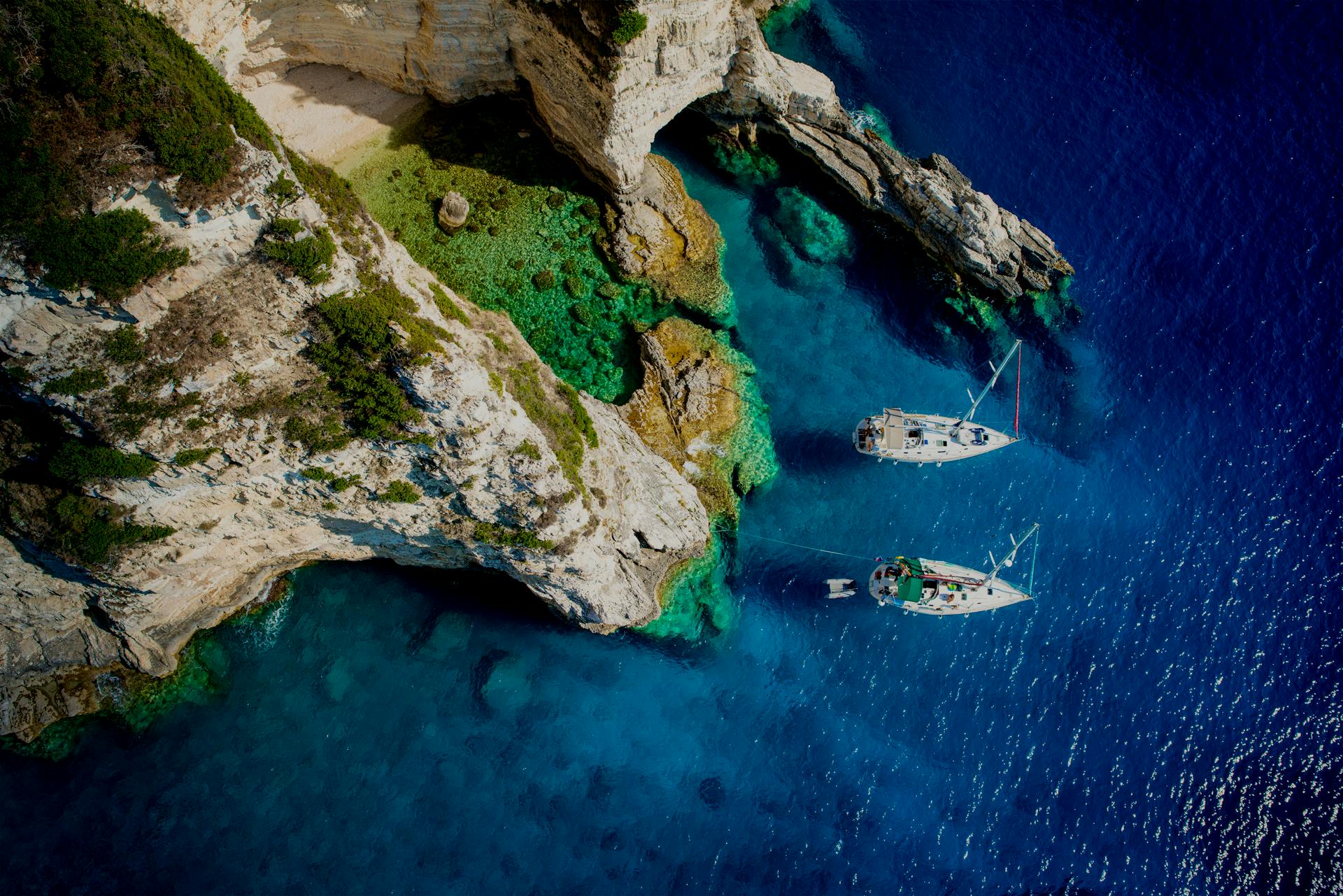
Undoubtedly one of the most breathtaking Greek islands, Lefkada—also known as Lefkas—sits in the heart of the Ionian Sea, conveniently connected to the mainland by a floating bridge. This makes it one of the few Greek islands you can drive to. But the real magic begins when you cast off the lines and explore its coastline by sea.
Mountainous and lush, Lefkada is famous for its dramatic cliffs and impossibly turquoise waters, often likened to the Caribbean. The west coast, with its wild beauty and tall cliffs, contrasts perfectly with the east, where you’ll find gentle bays, natural harbours, and some of the calmest sailing waters in all of Greece. Whether you're sailing on a monohull or catamaran, this island and its surroundings will keep you spellbound.
.
Lefkada offers something for every sailor. The island sits in a prime position between many smaller islands like Meganisi, Skorpios, Kalamos, and Kastos, making it ideal for island-hopping. The prevailing summer wind, the Maistro, generally blows from the northwest and is strongest in the afternoons, especially on the west side—perfect for experienced sailors and kite surfers. On the eastern side, you'll find tranquil waters and plenty of safe coves for overnight anchoring. This balance makes Lefkada a top destination for both beginners and seasoned sailors.
.
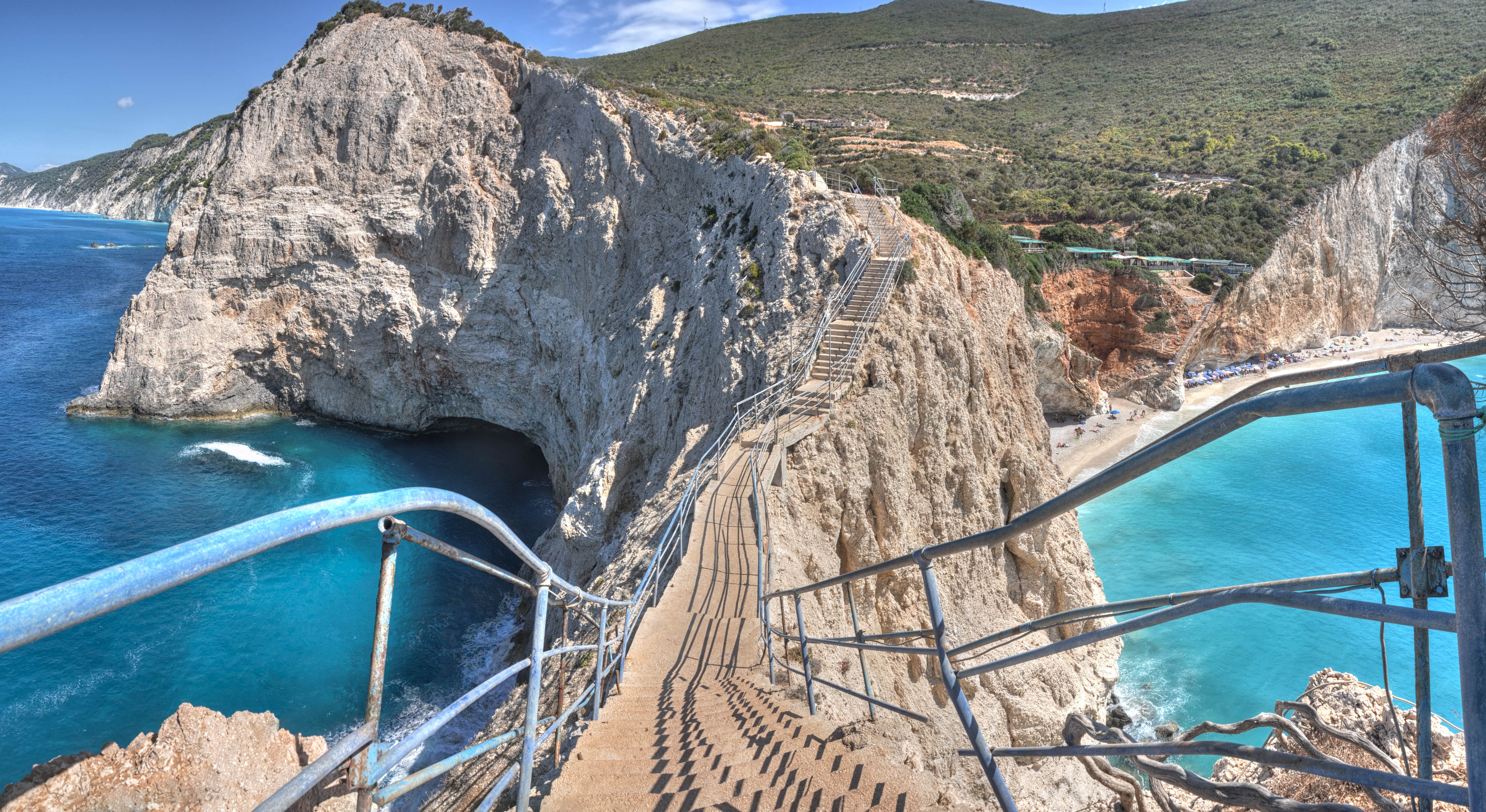
Located on the southwestern coast of Lefkada, about 44 km from Lefkada Town, Porto Katsiki is perhaps the most iconic beach on the island. Towering white limestone cliffs plunge into a turquoise sea, creating a jaw-dropping visual experience.
By boat:
You can anchor in calm weather off the beach in sandy patches at 6–10 meters. Be cautious of afternoon swell caused by the Maistro wind (NW) that often builds up on this exposed coast. It’s best visited in the morning when winds are low, or late afternoon for golden hour photos.
Why visit:
There’s no infrastructure here—just pure nature. Its inaccessibility by land (many steep stairs or long drives) makes it a premium stop for sailors seeking postcard beauty without the crowds.
.
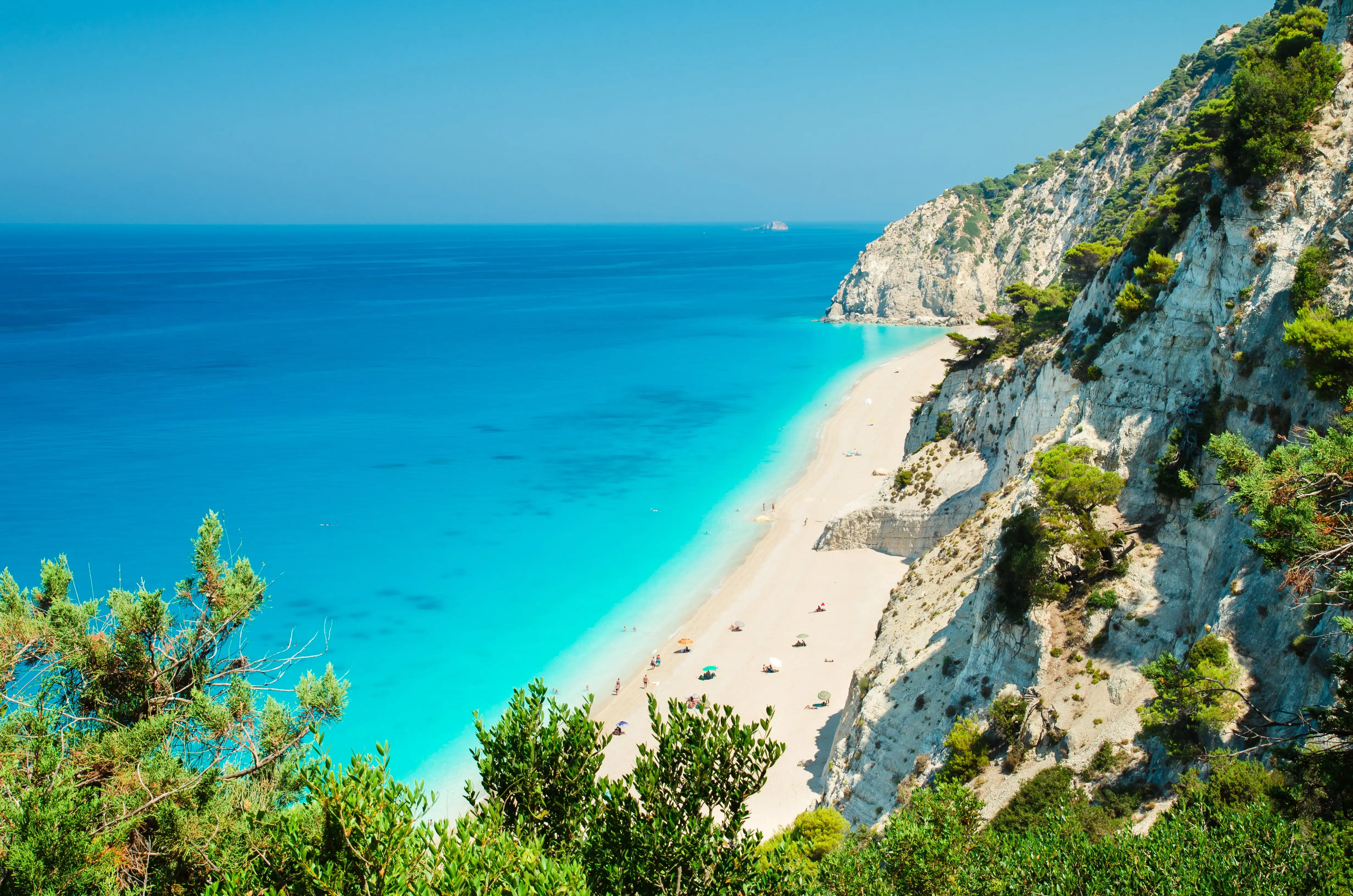
Sitting just a few nautical miles north of Porto Katsiki on Lefkada’s wild west coast, Egremni was once accessible by a long stairway—until an earthquake blocked the land access. Now, the best and often only way to get here is by sea.
By boat:
Anchor in 7–12 meters on sand in calm weather. Like Porto Katsiki, the beach is open to the prevailing NW winds, so anchoring is only safe when there’s no swell. It’s incredibly quiet, especially outside the hours when excursion boats pass by.
Highlights:
A long stretch of soft white sand and crystal water, with plenty of space to swim or beach your dinghy. Don’t expect shops or amenities—this is pristine seclusion at its best.
.
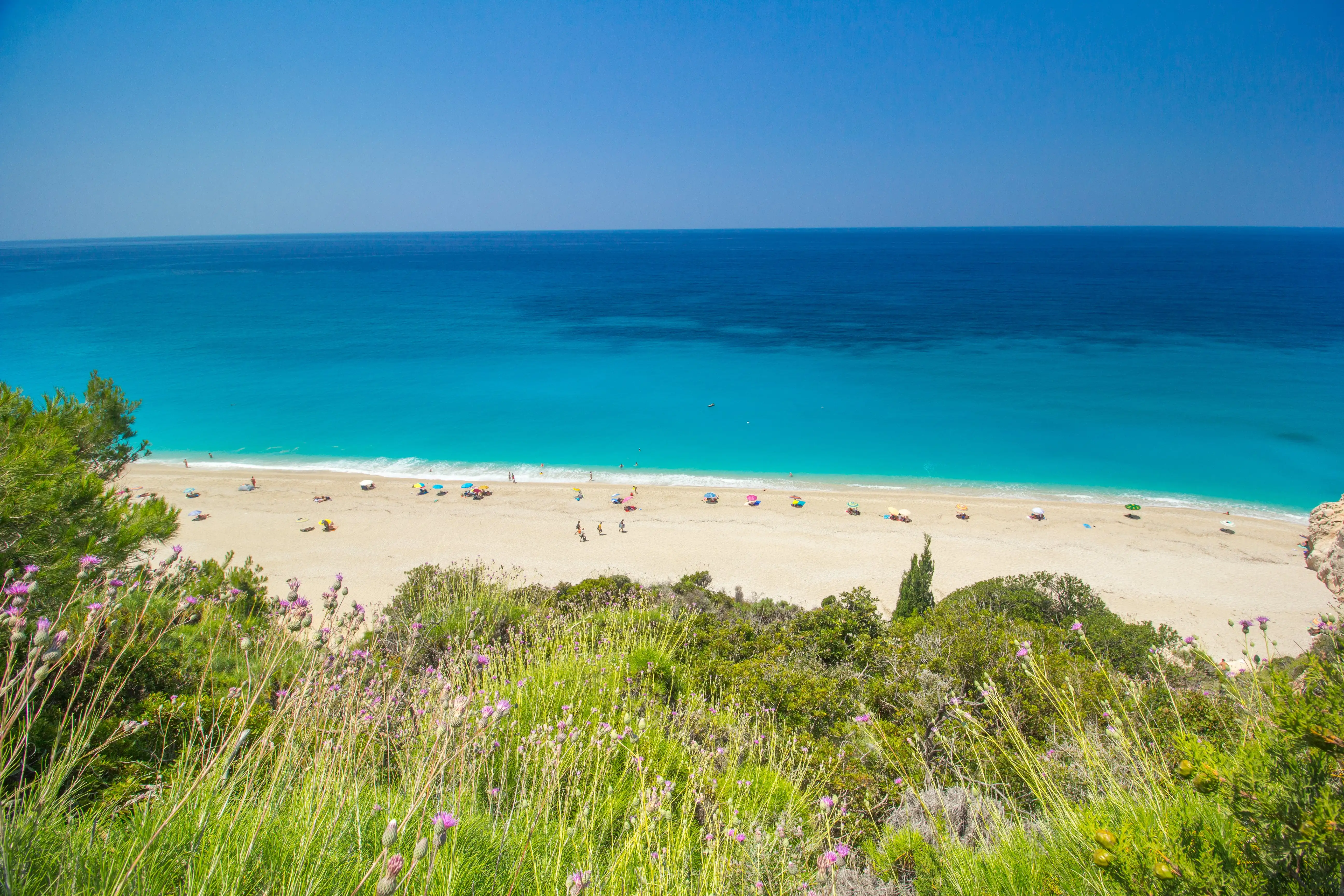
Tucked south of the village of Agios Nikitas, on the central-west coast of Lefkada, Milos Beach is surrounded by high hills covered in pines and Mediterranean scrub.
By boat:
Sailing in is the best option. Anchor in 7–9 meters on sand, but only in light conditions—this spot is exposed to NW winds and gets choppy in the afternoons.
Why visit:
Known for being a quiet spot with great wind for kitesurfers, it’s usually empty except for a few fellow sailors and adventurers. Its remoteness keeps it wonderfully unspoiled, and the steep cliffs around it make for great photos from sea level.
.
This serene bay is located on the southeastern coast of Lefkada, near the village of Poros. It’s a favourite stop for charter yachts and cruisers thanks to its protection and beauty.
By boat:
Enter Rouda Bay from the northeast, where you’ll find multiple spots to anchor in 5–10 meters on sand and weed. The bay is well-protected from NW and even southerly winds, with only occasional gusts funnelling in from nearby hills.
Highlights:
Calm and safe overnight anchorage with a pebbled beach, tavernas ashore, and even small watercraft rentals. You can explore the shoreline by kayak or paddleboard, and it's a great place to snorkel too.
.
Located at the southern tip of Lefkada, Vasiliki is a wide bay with consistent thermal winds and an inviting coastal village.
By boat:
Approach from the west, and anchor in the bay in 5–8 meters, or moor stern-to at the small harbour. Holding is good on sand, and shelter is decent from all but strong S/SE winds.
Winds:
Vasiliki is famous for “Eric,” a powerful afternoon thermal wind (force 4–6) that starts around 2 PM due to the surrounding terrain. Mornings are very calm—ideal for families and beginners.
Highlights:
Popular for windsurfing and sailing schools. The town has a laid-back vibe, bakeries, small markets, and a few good tavernas. It's also a great jump-off point to sail toward Ithaca or Kefalonia.

.
One of the few seaside villages on the rugged west coast, Agios Nikitas lies 12 km southwest of Lefkada Town and is a traditional Greek village untouched by large-scale tourism.
By boat:
There’s no harbour or anchorage directly off the beach due to the narrowness of the coast and exposure to NW winds. However, it’s worth anchoring nearby (e.g. Milos or Pefkoulia) and taking the dinghy ashore in settled weather.
Why visit:
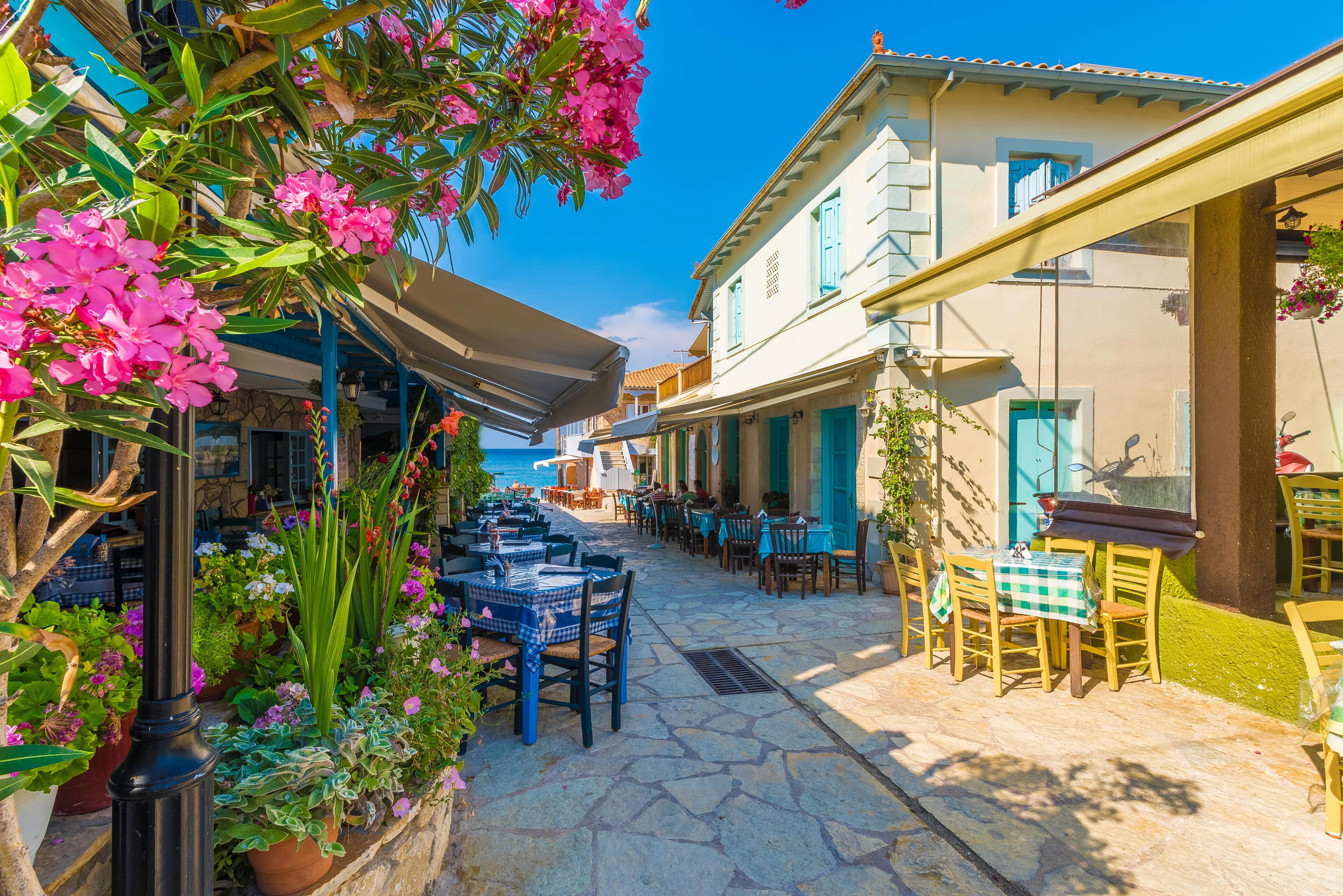
The village is built amphitheatrically on the hills, filled with stone alleys, flowered balconies, and small tavernas. Bella and Ivo loved Captain Corner taverna—highly recommended for a lunch stop while exploring.
Fun fact:
You can walk from here to Milos Beach via a scenic path over the cliffs—another reason to plan a land visit.
.
All three bays are particularly recommended if you're looking for stress-free nights with minimal swell and excellent protection from the northwest winds. Be sure to drop anchor on sand patches and avoid areas with thick weed, which might make holding less reliable.
.
Lefkada’s prime location in the Ionian makes it the perfect launchpad for an unforgettable route that spans both north and south, combining lush islets, Venetian towns, and natural anchorages that feel like well-kept secrets.
Paxos – A gem of olive groves and turquoise coves. Anchor in Lakka Bay for total shelter and electric-blue water, or moor in Gaios, the main port, tucked behind a natural breakwater island. Don’t miss the sea caves on the west coast – best accessed by dinghy at midday.
Antipaxos – Just a short hop from Paxos, this tiny island stuns with Caribbean-clear water and white sandy beaches. Voutoumi Bay is a bucket-list anchorage, especially early in the morning before the day boats arrive—good holding in sand and plenty of room to swing.
Parga (mainland) – A picturesque coastal town with pastel buildings and a castle on the hill, Parga is a highlight of the northbound route. Anchor off the beach or moor at the small town quay (space is limited – arrive early). Grab dinner under the bougainvillaea in the old town and sip ouzo with a view.
Corfu (Kerkyra) – Further north lies Corfu, grand and green, with Venetian architecture, British gardens, and a cosmopolitan feel. Gouvia Marina offers all services for a comfortable stop, or drop anchor at Kassiopi for a more laid-back experience with charming tavernas lining the waterfront.
Kefalonia (Cephalonia) – Head south again and explore Fiskardo, a jewel of the Ionian. The harbour is lined with pastel mansions and lively cafés, with mooring lines and a good anchorage just outside. For a wilder feel, try Assos or anchor off Myrtos Beach in calm weather – it’s one of the most dramatic spots in Greece, with cliffs towering above a brilliant blue bay.
.
Meet Bella and Ivo, a Swiss couple who chose Lefkada as the starting point of their Ionian sailing adventure on board one of our yachts. In their words: “We weren’t expecting so many secret coves, incredible sunsets, and places we had all to ourselves. It’s one of those places where every anchorage feels like a private paradise.”
Watch their video and get inspired to plan your sailing holiday from Lefkada:
.
Lefkada isn’t just a beautiful island—it’s a whole sailing playground with something new around every cape. Whether you're anchoring under soaring cliffs, snorkeling in emerald bays, or enjoying grilled octopus at a seaside taverna, you'll quickly understand why so many sailors return year after year.

€ 2,240
price of the whole boat

€ 1,733
price of the whole boat

€ 1,142
price of the whole boat

€ 2,520
price of the whole boat

€ 1,733
price of the whole boat

€ 3,072
price of the whole boat

€ 2,284
price of the whole boat

€ 1,339
price of the whole boat
Our regular email newsletters include information about our boats, holiday ideas, destination insights and cultural briefings. You can unsubscribe at any time and we'll treat your data with respect, never passing on your details to third parties. Find full details of our data management in our Privacy policy page
By signing up, I agree to Master Yachting's T&C's and Privacy policy
Looking for inspiration for your next sailing holiday? Packed with insights on trending sailing destinations plus stories from expert sailors and first-timers, our brand new digital magazine - Magister Navis - will guide your way to your next sail.
View magazine

